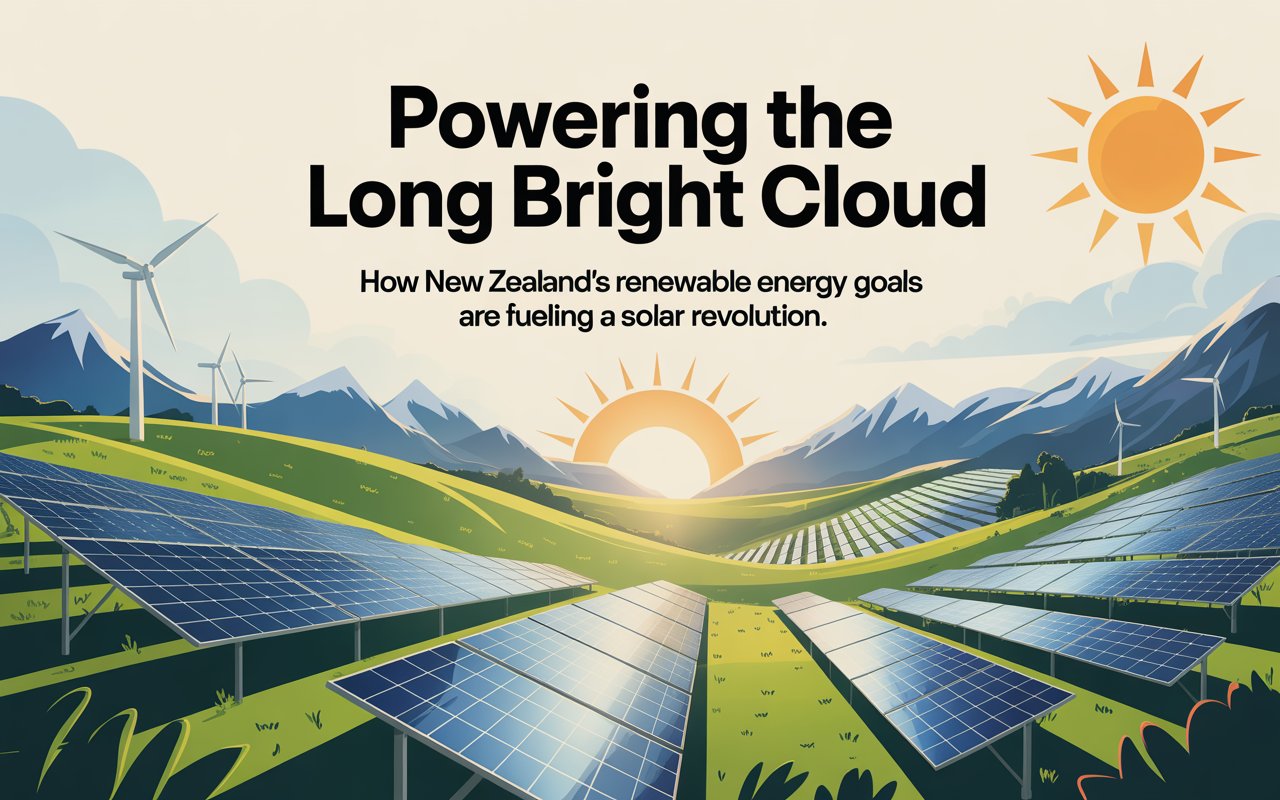
New Zealand stands at a unique crossroads. Blessed with abundant natural resources, it already generates over 80% of its electricity from renewable sources, primarily hydropower and geothermal. Yet, the journey to 100%—and the growing demands of a modernising economy—present a complex challenge. In this landscape, solar power is no longer a niche alternative but a central protagonist in the nation’s energy story.
Driven by ambitious government targets and a strong public mandate for sustainability, the solar industry in Aotearoa is undergoing a rapid transformation. This blog explores how national renewable energy goals are shaping the market, creating new opportunities, and defining the future of power generation across the country.
The National Vision: The 100% Renewable Electricity Target
At the heart of this shift is the New Zealand government’s commitment to achieving 100% renewable electricity generation by 2030 and a carbon-neutral economy by 2050. This isn’t just aspirational; it’s a strategic directive that is actively reshaping the energy sector.
While hydropower has been the traditional workhorse, its vulnerability to drought (known as a “dry year” risk) highlights a critical need for diversification. Solar power, with its complementary generation profile and scalability, is the perfect candidate to bolster grid resilience and ensure security of supply.
Key Drivers Shaping the New Zealand Solar Industry
Several factors, amplified by national policy, are accelerating solar adoption.
- The End of Cheap, Reliable Gas:
The government’s ban on new offshore oil and gas exploration has signalled a clear end to the fossil fuel era. As existing gas fields deplete, the cost of gas-fired generation is expected to rise, making solar and other renewables increasingly cost-competitive. For businesses, this provides a powerful incentive to lock in energy costs with solar. - Decentralisation and Energy Independence:
Kiwis have a strong independent streak, and this extends to their energy. The rise of distributed generation—homes and businesses producing their own power—is a key part of the national strategy. Rooftop solar empowers consumers, reduces strain on the national grid, and enhances local resilience, especially in remote areas. - The Electrification of Everything:
New Zealand’s path to decarbonisation runs through electrification. From the rapid adoption of Electric Vehicles (EVs) to the shift from gas boilers to electric heat pumps, national electricity demand is set to soar. Solar, especially when paired with battery storage, is crucial for meeting this new demand sustainably without over-relying on fossil-fueled backup generation.
From Residential Rooftops to Utility-Scale Farms: A Multi-Layered Market
The New Zealand solar market is evolving on three distinct fronts:
- Residential Solar: Homeowners are increasingly investing in solar batteries to achieve energy self-sufficiency, protect themselves from rising power prices, and provide backup power. The value proposition has shifted from simple bill savings to one of resilience and independence.
- Commercial & Industrial (C&I) Solar:
Businesses are turning to solar to reduce operational overheads, lock in long-term energy costs, and meet corporate ESG (Environmental, Social, and Governance) targets. For enterprises with high daytime energy usage, like manufacturers, cold storage facilities, and agricultural producers, the return on investment is becoming compelling. Success in this sector hinges on precise planning, starting with a robust Solar Preliminary Design to ensure the system meets specific operational needs. - Utility-Scale Solar Farms:
This is the newest and fastest-growing segment. Large-scale solar farms, often developed on underutilised land, are critical to meeting the 100% renewable target. These projects feed significant power directly into the national grid, displacing fossil fuels. The development of these farms requires sophisticated engineering, including Telecommunication Tower Design for grid monitoring and a certified Engineering Stamp to ensure structural integrity and compliance with New Zealand’s stringent building codes.
Opportunities and Challenges on the Path to 100%
Opportunities:
- Job Creation: The solar boom is creating a new wave of high-skill jobs in installation, engineering, sales, and maintenance.
- Technological Innovation: The integration of solar with battery storage and EV charging infrastructure is fostering a smart, flexible grid.
- Māori-led Development: Iwi and Māori enterprises, as significant landowners, are increasingly becoming key partners and developers in major renewable projects, fostering community-led economic development.
Challenges:
- Grid Integration: Connecting intermittent solar generation to a grid designed for centralised power stations requires significant upgrades and smart management solutions.
- Capital Investment: While costs are falling, the upfront capital required for large-scale projects remains substantial.
- Regulatory Hurdles: Navigating the resource consent process and meeting network connection standards can be complex. A thorough Solar Permit Design service is essential for navigating this landscape efficiently.
The Future is Bright: What’s Next for Solar in NZ?
The New Zealand solar industry is poised for exponential growth. We can expect to see:
- The Rise of Solar-Battery-EV Ecosystems: Homes and businesses will not just generate power but will manage it intelligently, using batteries and EVs as flexible storage assets.
- Innovative Business Models: Power Purchase Agreements (PPAs), where a third party owns the solar system and sells the power to the homeowner or business at a reduced rate, will become more common, removing upfront cost barriers.
- Increased Focus on Grid Services: As solar penetration increases, the ability for distributed systems to provide grid support services (like frequency regulation) will become a new revenue stream.
Conclusion: A Nation Powered by the Sun
New Zealand’s renewable energy goals are more than just policy; they are a powerful market signal. They have catalysed an industry, spurred innovation, and positioned solar power as a cornerstone of the nation’s clean, independent, and resilient energy future.
For homeowners, businesses, and investors, the message is clear: the sun is rising on a new energy era in Aotearoa. The time to be part of it is now.
Is your business or community ready to contribute to New Zealand’s renewable future? Our expertise in end-to-end solar design and engineering can help you navigate this exciting landscape. From initial feasibility studies to compliant permit-ready designs, we provide the support you need to build a successful solar project.
Contact Us Today for a consultation and see how we can help you harness the power of the sun